What Makes a Great Corporate Video Interview: The Elements That Actually Matter
A great corporate interview video is not about budget or equipment , it is about preparation, structure, and authenticity. This blog breaks down the seven elements that separate a memorable corporate interview from one that gets skipped in ten seconds, covering everything from question design and subject coaching to lighting, sound quality, pacing, and emotional connection.
%20(1).avif)
What Makes a Great Corporate Video Interview Feel Like a Real Conversation
A great corporate video interview feels less like an interview and more like a conversation you happen to be watching. What makes a great corporate video interview isn't a bigger budget or a fancier set. It's a subject who feels prepared instead of rehearsed, questions built to draw out a real answer, and a production team that gets the technical side right without making it the point.
That's why some corporate interview videos get shared across a company and others get skipped after ten seconds. Here's how to make great corporate video interviews, broken down by the elements of a great corporate video interview in order of how much they move the needle.
Key Highlights
- Authenticity beats polish. A subject who talks like themselves outperforms a scripted one.
- Subject preparation builds comfort, not memorized lines.
- Interview structure and question design shape whether an interviewee gives a soundbite or a story.
- Lighting and sound quality signal credibility before a viewer processes a word.
- Pacing and editing flow decide whether people watch to the end or bounce.
- A strong corporate video interview ties back to brand messaging without feeling like an ad.
Why Some Corporate Interview Videos Connect and Others Fall Flat
Every company has a corporate interview video sitting somewhere that never got watched past the first 15 seconds. Usually the problem isn't the subject, it's that the video treated the interview like a formality instead of the centerpiece.
Understanding what makes a corporate video interview effective starts with viewer trust. The corporate video production choices made before a question gets asked, like framing, sound setup, and how relaxed the interviewee looks, already shape how much the audience believes what comes next.
None of the elements below require a Hollywood budget, just planning. A production company that treats the interview as the backbone, not filler between B-roll, avoids most of the production mistakes that sink a corporate video interview before it airs.
Element 1: Authenticity Over Polish
Authenticity versus polish is the first tradeoff every corporate video interview has to make, and polish usually loses. A subject reciting a script sounds like it, no matter how good the writing is. Viewers pick up on stiffness within seconds and stop trusting the message.
Authentic delivery comes from letting the interviewee talk in their own words. Give them the topic, not a script. Let them pause, restart, or laugh at their own answer. A natural conversation, even a slightly messy one, reads as more credible than a performance.
Camera presence matters too, but not the way people assume. Strong on-camera presence isn't about performing for the lens, it's about forgetting the lens is there, which happens when the interviewer builds rapport first. Teams that want a repeatable process often lean on production tips built around interview-style shoots.
Element 2: A Subject Who Feels Prepared, Not Rehearsed
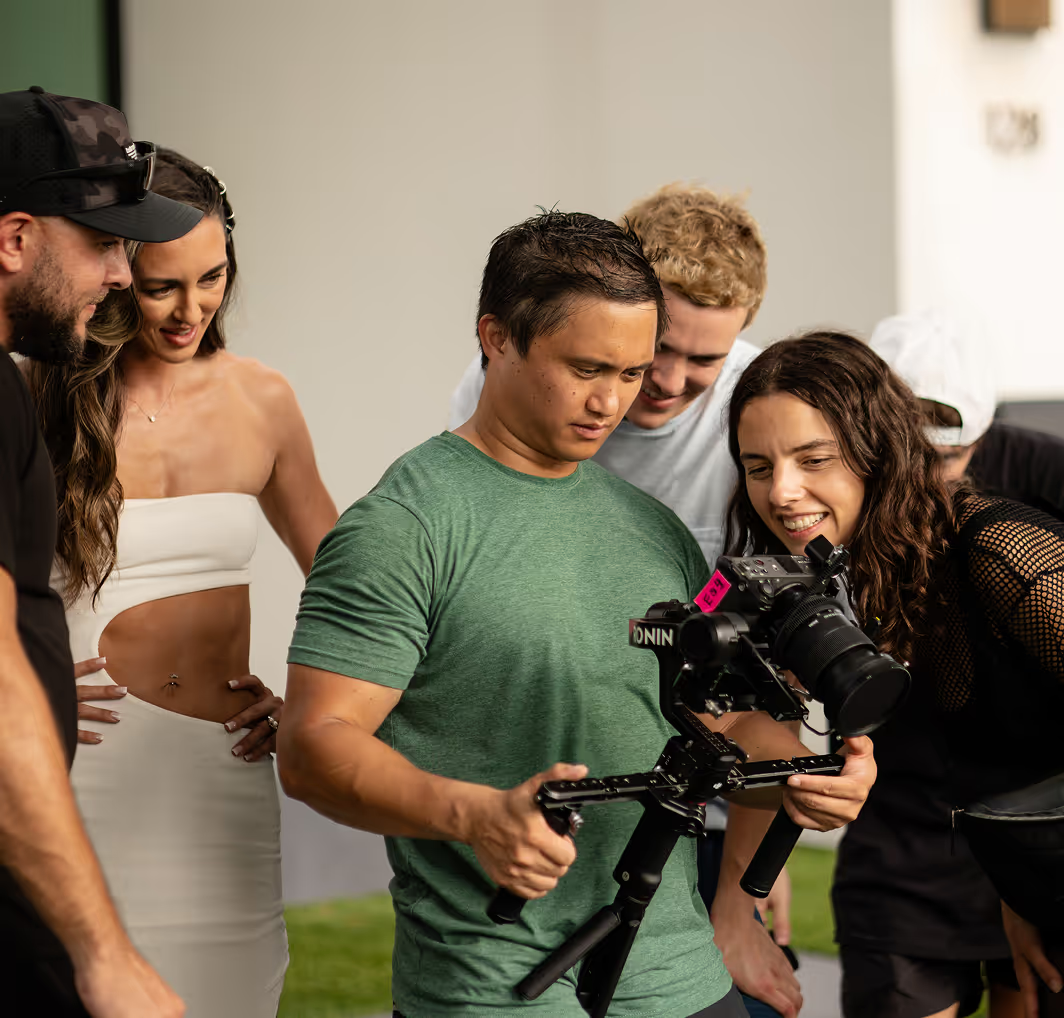
Subject preparation done right is quieter than people expect. It's not a script table read, it's a short call before the shoot where the interviewer shares the general direction, the interviewee hears a few of the questions to ask, and both sides get comfortable with each other's tone.
Nervous interviewees give short, guarded answers. Prepared ones give full ones. A five-minute warm-up before the cameras roll does more for the final interview video than any amount of scripting.
5 tips for preparing a professional video interview:
- Share the topic and question direction ahead of time, not a script.
- Run a short warm-up chat on camera first.
- Confirm wardrobe, lighting, and location the day before.
- Ask which story they're proudest of, then build a question around it.
- Remind them it's fine to pause or restart.
This step gets skipped more than any other in corporate video interview production, usually because of a tight schedule. It's worth protecting: an interviewee who trusts the process gives a better interview than one handed a list of interview questions five minutes before the camera rolled.
Element 3: Strong Interview Structure and Question Design
Question design as a craft is where most corporate interview videos separate from average ones. Closed questions get short answers. Open-ended questions get stories, and stories are what carry a video's message.
A strong interview structure moves from context to specifics to reflection. Start with something comfortable, like the interviewee's role, move into specific moments or results, then end forward-looking. That arc gives editors a natural shape to cut around and viewers a sense of progression instead of disconnected clips.
The interviewer's job is to listen more than talk. Follow-up questions built off what the interviewee just said beat sticking rigidly to a list. Teams learning how to film corporate interviews or plan the right questions to ask walk away with stronger footage, because the structure was planned instead of improvised.
Element 4: Production Quality That Builds Trust
Production quality as credibility isn't a nice-to-have. Lighting and sound quality are often the first thing a viewer notices, even if they can't name what's wrong. Harsh shadows, echoey rooms, or muffled audio all read as unprofessional, and that transfers straight to the brand behind the video.
This is where production value earns its keep. Clean lighting, crisp audio, and a set that fits the story add up to a corporate video that feels trustworthy before a single sentence lands. Viewers judge a company's competence by how its videos look and sound, and that judgment happens fast.
Companies without an in-house crew often work with a corporate video production company or hire a nationwide video production crew rather than risk borrowed equipment and no dedicated sound person.
.avif)
Element 5: Pacing and Editing That Keep Viewers Watching
Pacing and length decide whether anyone finishes watching. Viewer engagement drops steadily as videos get longer, especially past the two-minute mark, so most corporate interview videos work best when the edit trims everything that doesn't earn its place.
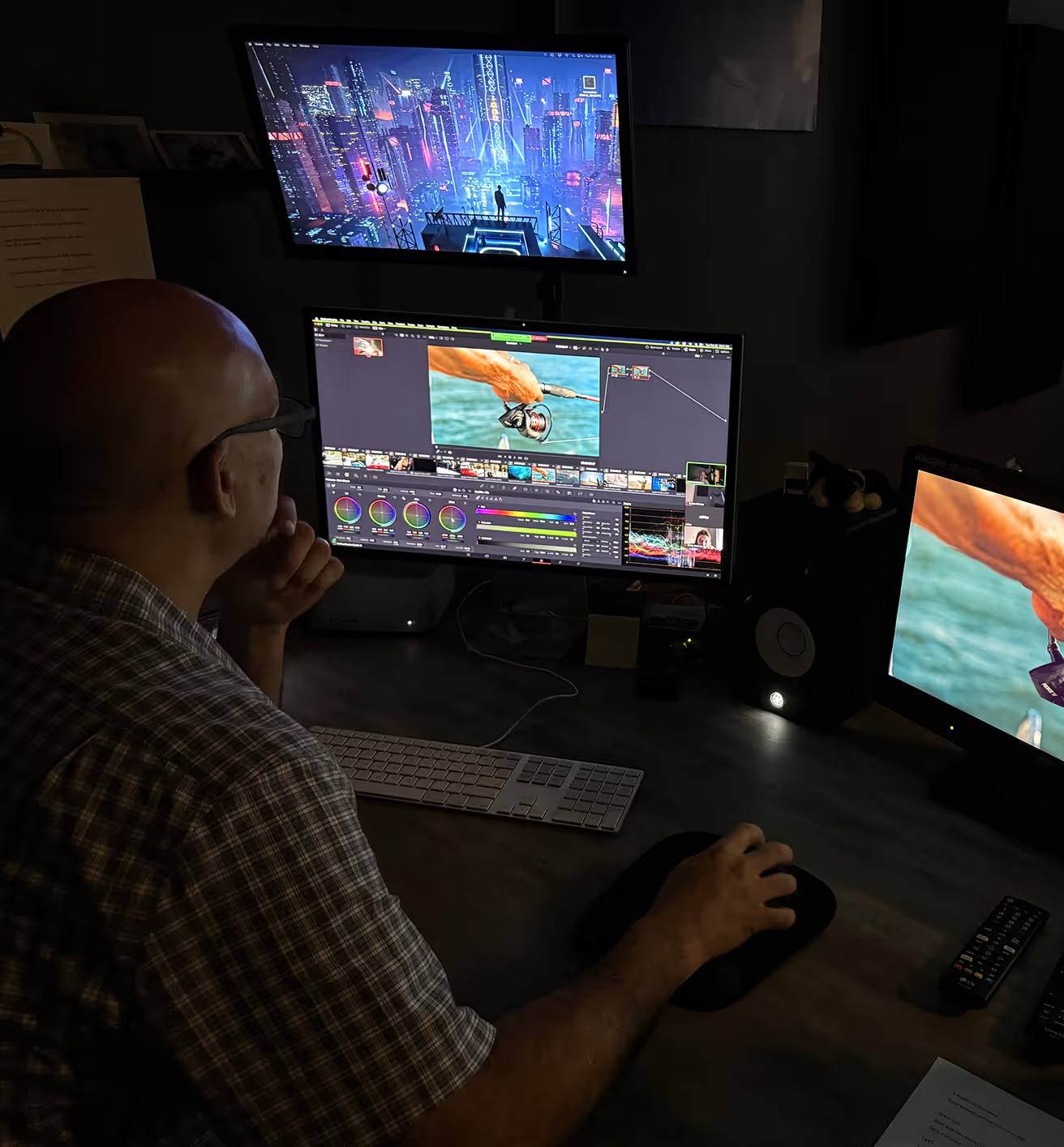
That doesn't mean every corporate interview video needs to be short, it means every second needs to earn its place. Editing flow should trim the pauses, false starts, and tangents that happen naturally in any conversation, while keeping the moments where the subject says something worth hearing.
Cutaways and B-roll help too, breaking up long stretches of a single shot so an editor can trim dead air without an awkward jump cut. Teams new to this can find a clear breakdown of the post-production workflow professional editors follow.
Element 6: Visuals and Tone That Match the Brand
A natural brand tie-in with proof points separates a corporate video interview from a testimonial that feels bolted onto an ad. Brand messaging should show up through what the interviewee says and the setting they're filmed in, not a logo stamped over every frame.
Visual tone matters more than most teams plan for. Color grading, framing, and set choices should match how the brand presents itself elsewhere. A financial services company filming in a cluttered breakroom sends a different message than one filmed in a clean, well-lit office, even with identical words.
The proof points work best when specific. A vague claim about being customer focused lands softer than an interviewee describing one real project. Teams can review marketing best practices on keeping brand tone consistent across every video format.
Element 7: Emotional Connection and Relatability
Emotional or human moments are what people remember after the specifics fade. Storytelling in corporate video works because of how memory functions, not because it feels nice. Stanford marketing professor Jennifer Aaker's Stanford research found that stories are remembered up to 22 times more than facts alone, which is why the interview segment carries more weight than a stats-heavy voiceover.
Gallup research backs this up: about 70 percent of decisions are based on emotional factors, with only 30 percent based on rational ones. A corporate interview video that leans into a real challenge or a before-and-after contrast gives viewers something to connect with beyond the product being discussed.
This is also where testimonial videos earn their reputation as one of the most effective formats in corporate video. Testimonial research shows 72 percent of customers trust a brand more after watching a positive video testimonial. Emotional connection doesn't mean manufactured drama, it means letting the interviewee's genuine reaction stay in the final cut.
What Separates a Great Corporate Interview Video From an Average One
The clearest test of any corporate interview video is simple: can a viewer restate the message a day later without rewatching it? A message the viewer can restate means the interview had a clear point, not a collection of pleasant soundbites. These are the qualities of a strong interview video that separate memorable from forgettable.
Average interview videos hit every technical box, good lighting, decent questions, reasonable length, but leave nothing behind. Great ones give the viewer one idea to hold onto, usually through a specific story. That's the before-and-after contrast worth aiming for: before the video, the viewer didn't know much about the company; after it, they remember one real thing.
Browsing a range of corporate interview video ideas before a shoot helps teams pick which format best fits the message.
The Bottom Line
What makes a good corporate interview video comes down to preparation, structure, and restraint, not spectacle. Authentic delivery, sharp question design, clean lighting and sound quality, and a tight edit all work together to make the interview land.
This blog walked through the seven corporate interview video best practices that separate a great corporate video interview from an average one, from authenticity and subject preparation to production quality, pacing, brand tone, and emotional connection.
Team Unity Media is a Boca Raton video production and CTV agency with a nationwide crew network and 1,000+ completed projects across corporate video, branded content, and unscripted work. If your team is ready to start your corporate video project, get in touch with a team that treats the interview as the most important part of the shoot.
Frequently Asked Questions
1. What are some tips for a great video interview?
Prepare the subject with a short warm-up conversation, build the interview structure around open-ended questions, and prioritize clean lighting and sound quality. A relaxed interviewee does more for the final video than a long list of scripted questions.
2. How long should a corporate video interview be?
Pacing matters more than a target number. Engagement drops sharply after the two-minute mark, so most corporate interview videos work best in the two-to-four minute range, with longer interviews trimmed down in the edit.
3. What questions should an interviewer ask in a corporate video interview?
Start with context like the interviewee's role, move into specific stories or challenges, and close forward-looking. Open-ended questions that invite a story produce far better footage than closed ones.
4. How to make a corporate interview video stand out?
Focus on authenticity over polish, let the interviewee's real personality come through, and build the edit around one clear message. A specific story with an emotional connection outperforms a video packed with generic claims.
Related Posts
.avif)
.avif)
.png)
.png)