B2B Video Marketing: How to Build a Video Strategy That Shortens the Sales Cycle
Most B2B video marketing gets made backward: one polished brand video, posted everywhere, with no plan for the buyer. This playbook maps video formats to each stage of the buyer journey, from thought leadership and demos to case studies and sales enablement clips. It also covers making video work for a whole buying committee, where B2B video gets seen, and how to measure pipeline and lead quality instead of views.
A B2B Video Marketing Playbook for Every Stage of the Buyer Journey
Most video marketing gets made backward. A b2b business commissions one polished brand video, posts it everywhere, and hopes marketing can help pipeline on its own. A team that sets out to create content without a plan wastes budget, and the buyer who needs a product demo never gets it built for them.
A real video strategy starts differently: with the buyer journey, the buying committee, and a marketing plan for where each piece will be seen, not just a decision to invest in video marketing. This should support a broader b2b marketing strategy, not replace it.
Key Highlights
- Buyers do most of their research before talking to a sales rep, and video has become essential for b2b teams.
- Buying committees average 9 to 11 people, so one clip rarely convinces everyone in the room.
- Formats work differently by stage: thought leadership video up top, demos and a case study in the middle, sales enablement near the close.
- Online video keeps climbing among all forms of content, reshaping what buyers expect.
- Most underperforming content gets fixed by measuring pipeline and lead quality, not view counts.
Why B2B Buyers Watch Video Before They Ever Talk to Sales
Video communication is no longer a nice-to-have inside digital marketing or online marketing budgets. Across the b2b space, buyers are not waiting for a sales rep to explain the product anymore.
According to 6sense's 2024 Buyer Experience Report:
- They are nearly 70% through their purchasing process before they engage a seller.
- They initiate that first contact more than 80% of the time.
- The average buying cycle runs about 11.3 months, with an average buying group of 11 people.
They also tell researchers they'd rather skip the sales call. A Gartner-cited survey found that 75% prefer a self-serve experience over talking to a rep, and a short demo or explainer video is what makes that possible, beating a plain text content thread every time.
The broader case for video's reach and ROI, including 2025 adoption numbers, is covered separately. What matters for a buyer-journey strategy is narrower.

The effectiveness of video shows up in one simple number: 78% watch something during research, often before a vendor is on their shortlist. Most marketers call video essential to an effective strategy as video consumption keeps climbing.
For anyone building a video marketing for b2b companies program, the teams that use video earliest in the buyer journey usually win the deal. Companies using video in their marketing report shorter cycles, and those that put video in their marketing strategies early tend to win more often.
The shift toward video marketing in b2b buying keeps accelerating. This is the one piece of content that needs to exist before the buyer picks up the phone.
How B2B Video Marketing Differs From B2C
A consumer video has one job: make someone feel something and click buy. The B2B version differs in a few specific ways:
- Different marketing goals. Buyers want proof, not just a feeling, so it has to answer a specific marketing question, a spec, a price, or a risk a consumer ad never touches.
- Longer sales cycle. A B2C purchase can happen in minutes. A multi-month evaluation means the same prospect might watch a brand piece in March and a product demo video in July, and both need to carry the same message, for b2b customers and b2b audiences alike.
- More than one viewer. It is almost never watched alone. It gets forwarded into a Slack channel or replayed in a meeting the vendor never attends.
Matching Video Formats to Each Stage of the Buyer Journey
Treating video content as one bucket is where most strategies go wrong, among other types of marketing content a buyer sees along the way. Formats should flow from the broader content strategy, and the kind of video for b2b marketing depends on the question being asked.
Comparing video types side by side helps teams choose, and the strongest video strategies map types of content to stage rather than instinct; making videos without this map wastes budget.
Thought leadership videos work early because they are not selling anything yet, and they help build trust before the buying committee sees a demo. It is a named expert sharing a point of view.
Research from Edelman and LinkedIn found this format leads a majority of decision-makers to research a product or service they were not previously considering. Done well, it also functions as evergreen content, building brand awareness long after it publishes.
A product demo video and a customer case study video belong further down the funnel. These are b2b video examples worth building deliberately:
- A demo that walks through the actual product, not a slide deck about it.
- A case study built around one customer's measurable result, the kind that lifts conversion rate on a landing page.
- A short testimonial, since a real customer voice carries weight a script never will.
For b2b video content ideas beyond those three, sales videos aimed at a specific objection, a training video, or a SaaS walkthrough can do real work on a small budget. Short-form video for social fits here too.
There is no perfect video for every audience, so an effective video answers one question well. Most lists of the best b2b marketing videos lean on exactly these formats.
Making Video Work for a Whole Buying Committee
A single piece, however good, is rarely aimed at everyone involved in a deal. Gartner research, cross-verified across multiple surveys, puts the average enterprise buying committee at 9 to 11 stakeholders, up from 5 to 7 a decade ago, which lines up closely with 6sense's own finding of 11 people per buying group.
Each stakeholder cares about something different:
- A technical evaluator wants the product demo video.
- An economic buyer wants proof with real numbers attached.
- A procurement reviewer wants something closer to a spec sheet than a story.
Account based marketing is built for this problem. Instead of one clip for everyone, an ABM plan maps two or three short pieces to two or three roles on the committee, reusing the same footage with a different opening for each.
Leveraging video this way, instead of treating it as an afterthought, is what separates a video marketing strategy that converts. Integrating video into the process from day one beats bolting it on later.
Building a B2B Video Strategy Before You Book a Crew
Strategy comes first; the shoot comes second. Before anyone books a corporate video crew, the plan should answer three questions:
- Which stage of the buyer journey does this piece serve?
- Which role on the buying committee is it built for?
- Where will it actually get distributed?
A good brief for a video shoot should name the sales objection, format, and channel; marketing efforts without one tend to drift toward whatever looks impressive on camera.
This is also where to decide how much branded content polish a piece needs: more for a top-of-funnel story, less for a bottom-of-funnel demo, since overproduction can undercut the credibility a case study is supposed to build.
Where B2B Video Gets Seen
Getting video in front of the right buying-committee members matters more than which single network carries it.
LinkedIn's study of more than 13,000 ads found only 7% contained any visible human emotion, yet the ones that did saw a 78% lift in engagement, and engaging video content built around a named expert drove a 40% lift over generic delivery.
CTV advertising for b2b adds another layer: eMarketer projects US connected TV ad spend will approach $38 billion in 2026, and the platform's own TV data shows strong B2B reach there too.
For a top b2b agency or an in-house team, the real lever is matching channel to committee role, including videos on social media that reps reshare, not chasing every network.
Our distribution guide covers the full owned, paid, and earned mix, along with TV commercials and video distribution planning.
The short version: a personal message in a follow-up email often moves a specific deal further than any paid placement.
Producing B2B Video Across Offices and Customer Sites
Much of the best work happens away from a studio. Customer case study footage and proof points usually get filmed at a customer's own office or job site, which makes multi-location video production the norm for brands with customers spread across several cities.
Coordinating a video production crew across sites raises real logistics: travel costs, consistent lighting and audio, and an interview style steady enough that a series of case studies feels like one program. A local crew in each market, under one creative plan, usually keeps budget and timeline in check compared to flying one team everywhere.
Turning One Shoot Into a Sales Enablement Library
A single day of filming with one customer can produce a full case study, several short social clips, a quote reel for sales decks, and raw footage for a training video. Treating a shoot as a one-video event wastes most of what the crew captured.
This kind of repurposing is where sales enablement video gets its best raw material, since reps need short clips for a follow-up email, not a full production.
These b2b videos, especially the case study videos cut from a single shoot, should feel like one connected library, not a pile of unrelated clips.
Measuring B2B Video Against Pipeline, Not Just Views
View counts are easy to report and the least useful video metrics for a sales cycle that runs months, not minutes. A piece with modest views but high engagement from a target audience list is doing its job; a huge reach with no connection to deals is not.
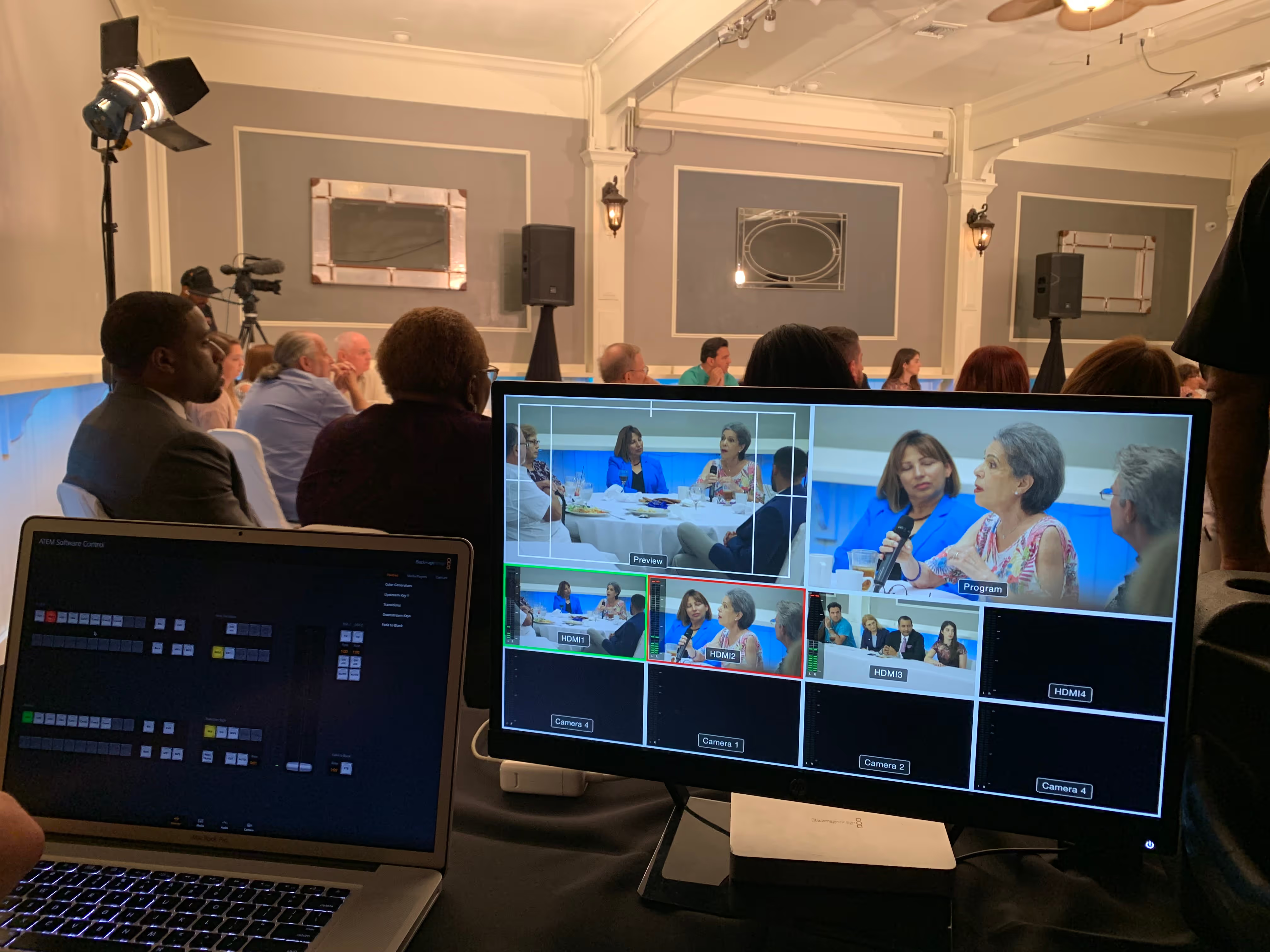
A better scorecard ties the work to pipeline and lead quality:
- Did accounts that watched a product demo video move faster through the pipeline?
- Did reps using a sales enablement piece close in fewer touches?
- Did a case study get cited back by a buyer on a call?
These are harder numbers to pull than a view count, but they justify next year's budget. Buyers say watching something helped them decide faster, a sales cycle outcome, not an engagement number. Tracking it against that outcome reflects the current state of marketing, separating real best practices from a reel that only looks good.
Where B2B Video Marketing Goes Wrong
Most of the common video mistakes are generic, and covered here. Two are specific to the buyer journey and buying committee this piece is about:
- One piece for the whole committee. Fix: map short clips to the roles that actually influence the decision.
- Measuring views instead of pipeline. Fix: tag engagement to CRM records before a year's budget goes to work nobody can tie to revenue.
The Bottom Line
This kind of planning works when it is built around the buyer journey and the buying committee, not one polished asset. Thought leadership earns early trust, demos and a case study answer mid-decision questions, and sales enablement gets a deal across the line.
A content marketing strategy that treats this work as one program, not one-off assets, is what separates a slide full of good intentions from real pipeline results.
Team Unity Media has produced more than 1,000 projects for 60+ clients, staffing crews in 345+ cities from its Boca Raton base, under founder Gordon Garreau's 10+ years producing for networks like AMC, HBO, and A&E.
Browse recent work for examples made for other B2B teams, or start with our services. Ready to plan your project? Contact us before any camera gets booked.
Frequently Asked Questions
1. How long should a piece run?
It depends on the stage. A thought leadership video or social clip works best under two minutes, while a demo or case study can run three to five minutes if it stays focused on one result. One of the simplest video marketing tips: match the length to the goal, not the budget.
2. What's the difference between a product demo video and an explainer video?
A demo shows the actual product or service in use, often screen-recorded. An explainer is more conceptual and focuses on the problem behind the solution.
3. Does connected TV work for B2B companies?
Yes. It reaches decision-makers at home in a less cluttered environment than social feeds, and the platform now offers B2B-specific targeting there.
4. How many pieces of content do buyers watch before talking to sales?
Research varies, but most b2b marketers report buyers watching several product and company pieces before reaching out. The 6sense Buyer Experience Report found they are nearly 70% through their decision before engaging a seller at all.
Related Posts