Employer Branding Video: How to Show Candidates Why Your Company Is Worth Joining
Most candidates research a company before they apply, and a listing alone rarely shows what working there is really like. This guide covers how to build an employer branding video around your employer value proposition, including five formats, what to show, and how to plan and film across offices. It also covers where to place the video so candidates find it, and how to measure applications and results instead of views.

How to Build an Employer Branding Video Candidates Trust Before They Apply
Most candidates research a company before they apply. They check your company site, scan reviews, and look for proof that the job listing matches reality. An employer branding video gives them that proof in about a minute, without generic footage or a polished voiceover.
This guide covers employer branding video examples and formats that fit a broader recruitment marketing strategy, plus how to make an employer branding video, film it across offices, and measure whether it works.
Key Highlights
- Candidates research before applying, so your career site and job postings need more than text
- It differs from a culture video because it is built on your employer value proposition
- Five formats cover most needs, from a brand film to a day in the life video
- Measure applications and results, not just views
Why Candidates Judge Your Company Before They Read the Job Description
Job seekers don't wait for the interview to form an opinion. A 2017 Energage survey, reported by HR Dive, found that 76% of job seekers research the company before applying. They piece together a picture from reviews, social media, and whatever your company site shows them.
Talent brand also affects costs. A 2013 LinkedIn playbook, reported by People Matters, found that investing in talent brand can cut the cost of filling a role by up to 50% and turnover by 28%. The figures are older, but they show why this work pays off in attracting and retaining talent.

That is why candidate experience starts early. Candidates decide whether they want to work for your company, and whether it feels like a great place to work, by checking claims against reality, including employee success stories.
A short film can show real working days in a way a listing can't. That is what talent attraction depends on.
What an Employer Branding Video Is and How It Differs From a Culture Video
This is a recruitment marketing video built to attract new talent by answering one question: why choose this company? It speaks to prospective candidates, while many business videos speak to customers.
A company culture video shows the company's work, work culture, and workplace culture day to day, including behind-the-scenes footage, and often serves onboarding. The recruiting version reuses that footage but edits it around talent attraction: what the role offers and why someone should apply now.

Both start with the employer value proposition, or EVP: the specific reasons employees stay, such as growth, flexibility, mission, team dynamics, and leadership. Ask current staff, not leadership, what those reasons are.
A clear EVP anchors your employer brand strategy across every format. Build scripts around it and the film starts to feel human instead of scripted.
Employer Branding Video Formats That Show Candidates Why Your Company Is Worth Joining
Comparing a few employer branding video ideas shows which of the best employer branding videos best fit your funnel. Each format is a different way to engage candidates during the hiring process.
Brand film. Two to three minutes on company values, the company's mission, and what makes the company unique and a great employer. Cut it down for postings and social posts, and reuse footage from any branded content production you already have.
Day-in-the-life video. Follows one employee through a shift, showing the real work environment and work-life balance that a listing can't. Candidates can picture themselves in the role.
Employee testimonial video. Unscripted clips that showcase what it's like to work there and what the job actually feels like. Employees can also share these clips on their own profiles, which is employee advocacy at its simplest.
Hiring manager video. A direct-to-camera clip from the person running the interview. It helps create a personal connection before day one.
Careers page video. A short cut, roughly sixty to ninety seconds, for the top of your jobs page or a single posting.
You don't need all five at once. Start with one or two that match where candidates drop off in your funnel.
What to Show So the Right Candidates Say Yes
Help the right candidates say yes and let the others self-select out. Successful employer brand videos are specific, and they show what talent wants to know.
Show:
- Real employees in their actual workspace, doing the work
- Different roles, plus the different industries and b2b clients you serve if that range is part of your pitch
- Authentic employee stories that let candidates see the people behind the listing
- Honest trade-offs, such as a fast pace, so poor-fit candidates opt out early
- The company's commitment to employee growth and the company's values in action, such as a real promotion or training story
Leave out:
- Generic stock footage, jargon, and claims true of every company ("we're a family")
- Any line that could appear in any company's film
Specifics make a film believable and bring your employer brand to life. If an answer sounds like a mission statement, film it again with a looser question.
How to Plan an Employer Branding Video Shoot
Good employer branding video production runs strategy first, script second, camera last. Before the video shoot, gather the three or four reasons staff stay from HR, exit interviews, or a survey of senior employees and recent joiners.
Pick a mix of early-career staff and veterans so candidates see career development. Brief them loosely, because employees talking in their own words beat a script. Good starter questions:
- What made you take this job?
- What surprised you in your first month?
- What does a normal Tuesday look like?
- What is the hardest part of the job?
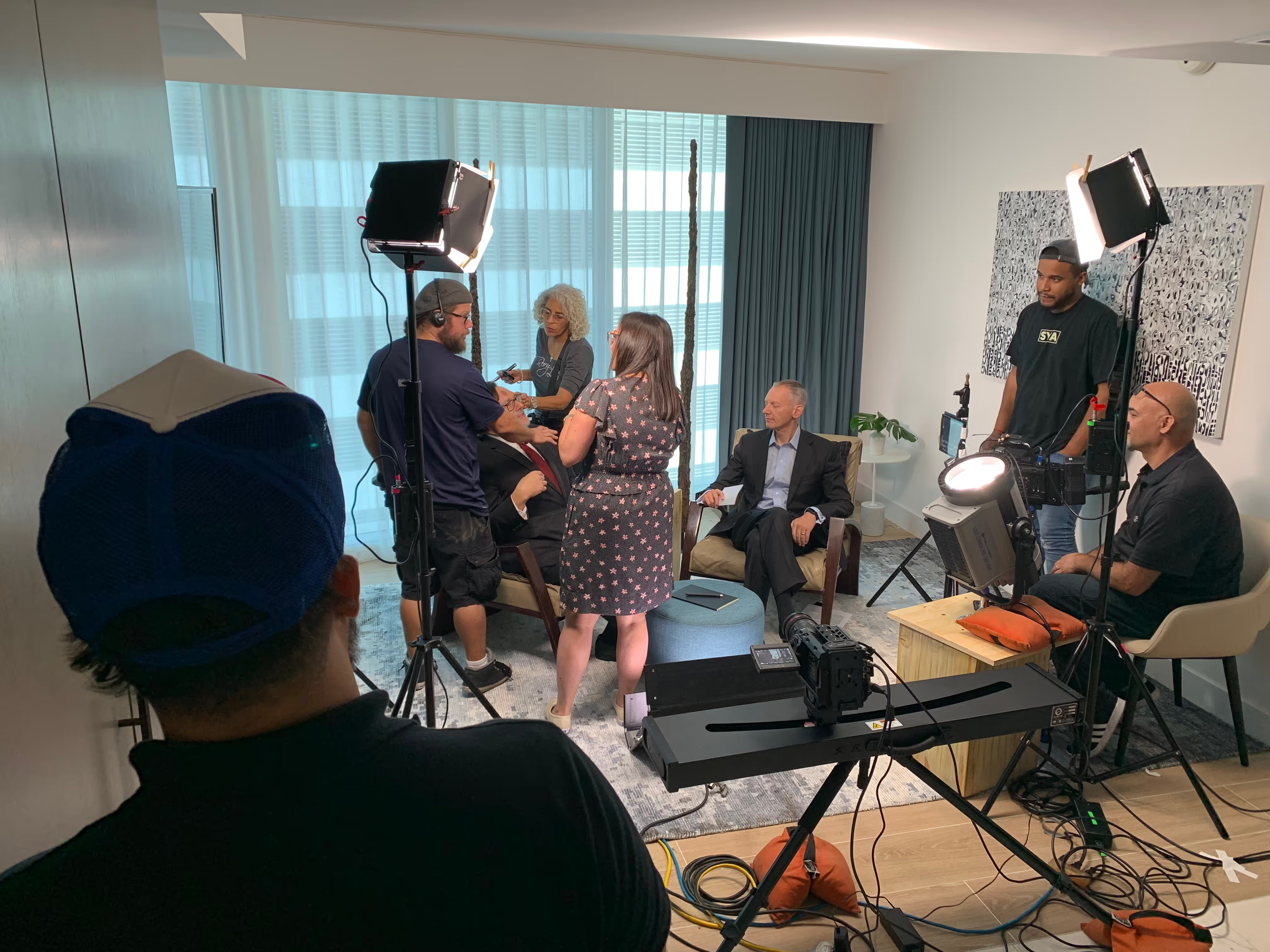
Add b-roll of the workspace, a team meeting, or a recent product launch. Borrow from corporate interview video ideas so real interview framing feels like a conversation, not a commercial.
Before shoot day, confirm locations and times, build a shot list, and get a signed release from everyone who appears on camera.
How to Film Employer Branding Videos Across Offices and Teams
A film shot at headquarters says nothing about the branch a candidate would join. Multi-location shoots fix that.
Use a multi-location video production crew that staffs local shoots in each market instead of flying one team everywhere. A local crew already knows its area's venues, lighting conditions, and permit process.
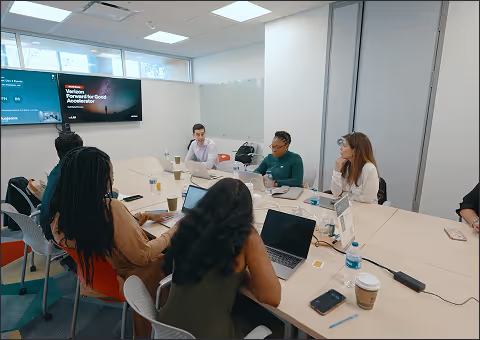
To keep every office looking like one company, have one producer or creative lead set shared storyboards, lighting notes, and interview questions. A crew network can staff each city while that lead keeps the look consistent. Lock the video details early: framing, color grading, and question order.
Where to Use Your Employer Branding Video So Candidates Actually Find It
Put the film in front of the right audience, where potential candidates already look:
- The top of your jobs page
- Individual job postings
- Social channels and recruiting events
- Welcome materials for new hires
CareerBuilder data from 2013 found that job postings with video were viewed 12% more often and drew a 34% greater application rate.
Push it out as a LinkedIn recruiting video, especially from employees' own profiles. Advocacy research states that employee-shared content gets up to eight times more engagement than the same content posted from company channels.
One shoot day can also be cut into several short clips for social and job postings, which gives you video content and employer brand content to post over time. To reach passive candidates, a video distribution service can target specific audiences with paid placement.
How to Measure Whether Your Employer Branding Video Is Working
Views are a vanity number. Track what talent acquisition teams care about:
- Application rate on postings with the film versus without it
- Time to fill for roles where the film was part of the candidate's journey
- Early feedback from new employees in a first-week survey on whether it matched reality
- Completion rate, since early drop-off points to a weak opening
Review the takeaways each quarter. If new employees describe something different from what the film promised, revisit your positioning before filming again.
Mistakes That Make Employer Branding Videos Backfire
- Leading with generic clips. Candidates tend to recognize them. Fix: use real workspace footage, even if it looks simpler.
- Over-scripting. Rehearsed answers make people sound like they are reading talking points. Fix: use open-ended questions and multiple takes.
- No call to action. A strong film that never says where to apply wastes the click. Fix: end every cut with a link or next step.
- One film for every role. A generic cut can't speak to every position. Fix: cut role-specific versions from the same shoot.
- Never updating it. A film featuring people who left years ago undercuts trust. Fix: refresh it when featured staff leave or your offer changes.
The Bottom Line
Candidates research before they apply. Build your film around real reasons people stay, cast current staff instead of actors, and place it where candidates look, so you can attract and retain top talent.
Team Unity Media is a Boca Raton, FL video and CTV company with 1,000+ projects across 345+ cities. Its services include culture and recruiting campaigns, shot by vetted local crews nationwide to help brands attract top talent.
If your jobs page still leans on stock photography, browse our work for recent shoots, or contact us to start your corporate video project.
Frequently Asked Questions
1. How much does it cost?
Cost depends on crew size, number of locations, and editing complexity, and on whether you need one main film or several short clips. When you request quotes, ask an employer brand video agency whether recruitment video production, such as role-specific cuts, is included or priced separately. A corporate video production company can quote once you know your locations and formats.
2. How long should it be?
Aim for two to three minutes for the main film and roughly thirty to ninety seconds for cuts used in job postings and social feeds.
3. Who should be on camera?
The person running the interview or a recruiter for the direct pitch, plus newer and longer-tenured staff across different positions. Avoid using only leadership.
4. How often should we refresh it?
Refresh it when featured staff leave, offices change, or your offer shifts, and review it at least once a year.
Related Posts