How to Vet a Video Production Crew Before You Trust Them With Your Shoot
Booking the wrong video crew can mean a wasted shoot day or a reshoot that costs more than the original budget. This checklist covers what to verify before shoot day: who actually shot the reel, whether insurance is current, what happens when gear fails, what the contract says about usage rights and cancellation, and how the crew communicates. It also covers vetting crews across multiple cities and includes a reusable scorecard for rating every booking.

A Practical Checklist for Vetting a Video Production Crew Before Shoot Day
How to vet a video production crew is the one step most hiring guides skip, and skipping it is expensive. Booking the wrong crew doesn't just mean a weaker video; it means a wasted shoot day, an awkward delay to explain, and sometimes a reshoot that costs more than the original budget.
Knowing how to vet a video production crew means checking five things before you sign anything: who shot their reel, whether their insurance is current, what happens when their gear fails, what the contract says about cancellation, and how they communicate.
Most guides focus on how to hire a video production crew at the company level; a quick search for video production advice covers companies far more than individuals, whether the job is film or video.
This guide covers both: how to vet a video crew member by member, and how to choose the right video production crew structure.
Key Highlights
- Verify that a director of a photography reel actually belongs to the person you booked, not their studio.
- Confirm certificate of insurance and general liability insurance before anyone touches your location.
- Ask about backup equipment and data redundancy, not just the primary gear list.
- Put usage rights, footage ownership, and kill fee terms in writing before the trial shoot.
- Use a repeatable crew scorecard so each round gets faster, not riskier, as you scale.
Why a Weak Crew Costs More Than a Reshoot
A video production crew that's weak in one spot rarely fails quietly in film production. It fails on shoot day, with the client watching the clock.
Changes made early are cheap; changes made after the camera has rolled are not. Late-stage fixes in post production cost far more than catching the same issue earlier, and a full reshoot costs most of all.
The same logic applies here: a gap found mid-shoot almost always costs more to fix than the same gap caught earlier.
That's the real argument for spending an extra hour checking a crew before you book one. It's cheaper than the alternative.
Crew Versus Company: What You Are Actually Vetting
Checking out a production company and checking out a crew are two different jobs; most advice only covers the first. This comparison covers the company-level decision; this guide picks up at the individuals who show up on set.
A company's pitch deck and account manager show how the business presents itself, not which person on set will actually be behind the camera. Many agencies subcontract crews outside their home city. Vetting video production crew members individually, not just the brand, is what protects a shoot.
A full video production crew is built from distinct, below-the-line production crew roles. On a typical corporate shoot, you're relying on:
- A unit production manager, line producer, and production coordinator overseeing budget and logistics; on larger jobs, the line producer supervises the production coordinator directly
- A first assistant director (1st AD) and, on larger jobs, a second assistant director (2nd AD) running the schedule
- A director of photography (DP) or cinematographer leading camera, with a camera operator and camera assistants covering first assistant camera (1st AC) and second assistant camera (2nd AC) duties, loader and clapper included, keeping the camera in focus, on film stock or digital alike
- A digital imaging technician (DIT) managing footage on set
- A gaffer and best boy electric running lighting for the electrical department, and a key grip, sometimes called an assistant to the key grip, leading the grip department
- A boom operator or sound recordist on audio, with a supervising sound editor joining for larger post schedules
- An art director and a production designer to achieve a consistent look, a location manager, a stylist who may manage the wardrobe, and production assistants rounding out the rest
Smaller shoots often collapse several crew positions into one or two people. This breakdown of the filmmaking process, and the making process behind it, is film crew roles explained in plain terms. There's no single best film crew size; it scales with the shoot.
It helps you put the right crew together instead of assuming one generalist can cover a film set end to end. You are evaluating each specialist individually, not just the name on the invoice.
Then ask what most people skip: have these individuals worked together before? A DP and gaffer who've shot ten jobs together read each other without talking; a crew assembled fresh still builds that shorthand on your time and budget.
This crew guide is worth a read before your first booking outside your own city.
Check the Work, Then Check Who Actually Made It
A portfolio link proves almost nothing on its own. The real question is whether the work in front of you was made by the person you're about to book.
Start with the DP's reel. Ask which specific projects they personally shot and lit, not just projects their studio produced. A reel built by an individual should hold up to a direct question like, "Walk me through how you lit this scene."
Crew references work the same way. Skip "were they good to work with" and ask something specific instead:
- Did they arrive with a backup plan when gear failed?
- Did they hit the schedule on the call sheet?
- Would you book them again, and why or why not?
Specific questions produce protective answers. These are close cousins of the questions to ask a corporate video production company; that list covers the agency side, while this one stays on the individual.
Confirm Insurance, Compliance, and Paperwork
A certificate of insurance and general liability insurance are non-negotiable before a crew touches your location. This is the step people skip most, with the clearest financial downside.
A certificate of insurance proves a crew actually carries coverage, not just claims to. Most locations expect general liability insurance around $1 million per occurrence, a higher aggregate limit, and evidence you can be named an additional insured party.
This protects your brand, not just the crew, if someone is injured or a location gets damaged.
Ask for the certificate before the shoot, not after. A crew that stalls on producing one is telling you something important.
Test Their Gear and Their Backup Plan
A well-prepared crew can describe their backup equipment and data redundancy plan without pausing; what matters is what happens when something on that list fails mid-shoot.
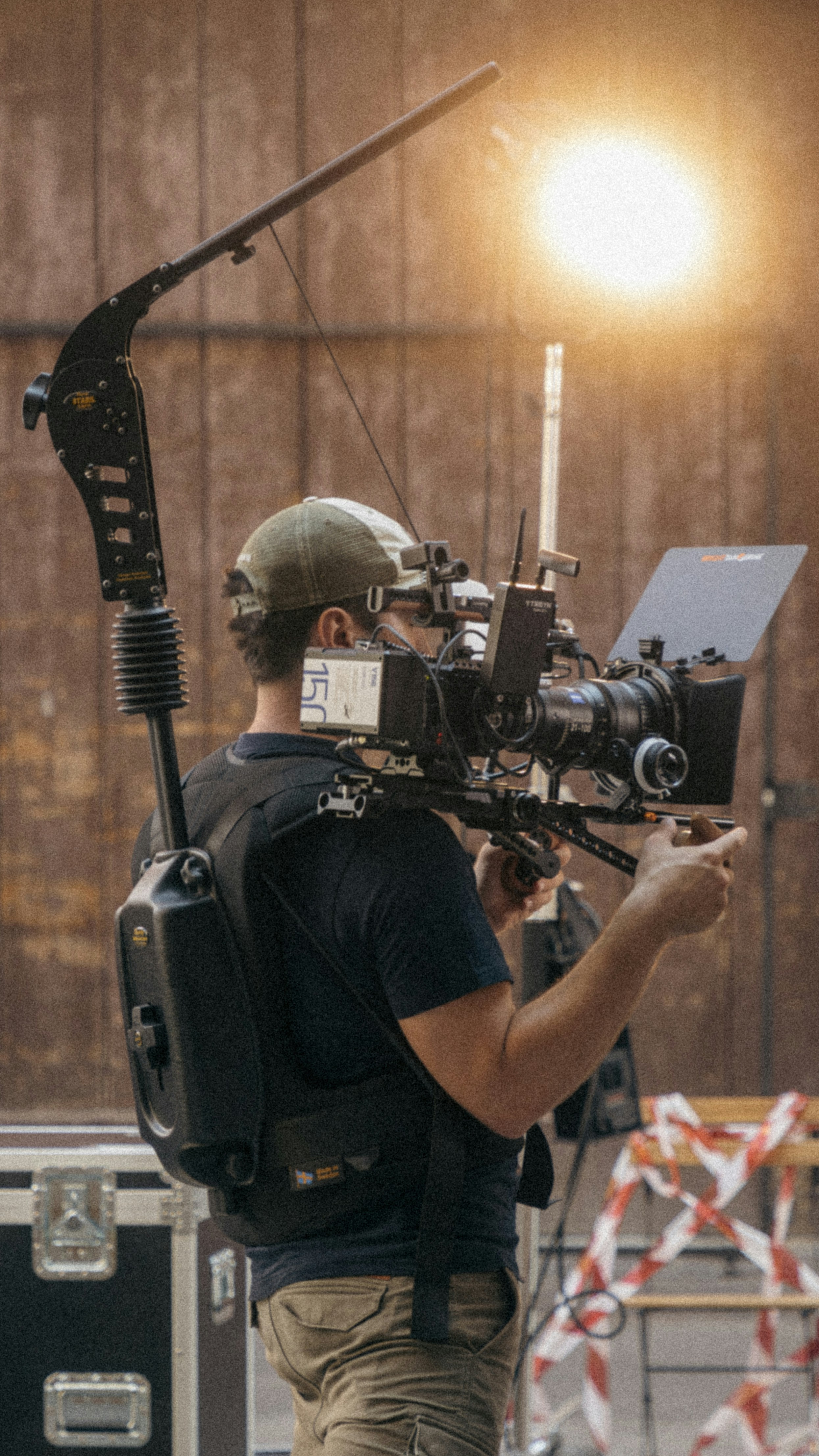
Ask directly about backup equipment: a second camera body for the digital camera package, spare batteries, a backup audio recorder, extra memory cards.
Then ask about data protection. A widely used standard in professional video work is the backup method known as the 3-2-1 rule: three copies of footage, on two different storage types, with one copy kept offsite.
A crew that describes their redundancy plan without hesitating has already dealt with gear failure; one that hasn't is a risk you're taking on.
Match Experience to Your Type of Shoot
Technical skill and relevant experience aren't the same thing. A crew excellent at documentary-style event coverage may be the wrong fit for the controlled, interview-heavy shoots a corporate video production company handles for its clients.
Ask for references and reel samples from the same category of work you're booking. A film crew comfortable running a two-camera executive interview, with a boom operator and an audio engineer, is a different skill set than one used to fast-moving event coverage.
Neither is better; the mismatch causes problems. If your shoot needs heavy post-production, such as motion graphics or multi-language versions, confirm the crew's video editing experience matches too, before you book.
Run a Short Call or Trial Before You Book
A 15 to 20 minute call reveals more than a resume ever will. Watch how quickly the crew answers direct questions and how they talk about past problems on set.
For anything beyond a one-off shoot, consider a trial shoot before a longer engagement or a multi-day production. A short, lower-stakes session lets you evaluate on-set communication directly, including whether this group functions as a team, not just individuals sharing a call time:
- How the crew talks to each other, not just to you
- How they handle a surprise request
- Whether they actually follow the call sheet you send them
A call sheet tells everyone where to be and what's being filmed; a crew that ignores it on a trial shoot will likely ignore it on the real one. To plan your video shoot with a vetted crew, this guide covers what a solid timeline should include.
Red Flags That Should End the Conversation
Getting the right people in the room matters as much as getting the paperwork right. These five signals mean you should walk away from a crew before you book them, not after:
- Vague about insurance. If a crew can't produce a certificate of insurance within a day or two, assume coverage is thin or missing.
- No backup equipment plan. A crew that hasn't thought through gear failure hasn't learned from the shoots that needed it.
- Resistance to putting usage rights and footage ownership in writing. This single contract term decides who can use the final video, where, and for how long.
- No clear cancellation and kill fee terms. Reasonable crews expect a tiered structure: smaller near the shoot date, higher once production starts.
- Can't name specific past clients. Vague answers about experience usually mean limited experience.
For a broader rundown before you commit, this guide covers several more ways budgets go sideways.
Vetting Crews Across Multiple Cities
Multi-city video production multiplies every step above. A team producing in five markets, from a short film shoot to a full commercial, can't personally reference-check every local booking. Finding a crew once is easy; hiring crew for every new market is harder to repeat.
This is why a vetted crew network solves a problem one-off sourcing can't. A partner with a pre-screened bench has already confirmed insurance and gear reliability in that city, so crews across markets meet the same bar.
Team Unity Media runs this model across 345-plus cities with more than 4,500 crew members on over 1,000 projects, so the screening usually happens before a brief even lands.
Choosing whether to hire a nationwide video production crew through one coordinated partner or source city by city often comes down to that overhead.
This breakdown makes the case for why the benefits of hiring a local video crew still matter. The point here is simpler: local or not, the crew still clears the same checks.
A Simple Scorecard You Can Reuse
A video production crew checklist works best when it's consistent across every booking, not reinvented each time. Whether you're learning how to choose a video production crew for the first time or booking your fiftieth shoot, a crew scorecard turns the steps above into a simple rating system you can reuse, like below:
Score each new crew before you book, and keep the sheet on file. Over time it becomes a record of who scores well against crew cost, so the right team isn't just the cheapest bid.
The Bottom Line
Checking out a video production crew isn't about distrust. It's about protecting a shoot day that, once it's gone, can't be bought back.
Team Unity Media is a Boca Raton video and CTV agency built around this kind of screening at scale, under founder Gordon Garreau's 10-plus years leading TV and branded work for channels including Starz, AMC, and HBO.
Ready to book a crew that's already cleared this list? See our services or reach out to talk through your next shoot.
Frequently Asked Questions
1. What is a certificate of insurance, and why does my video shoot need one?
It proves a crew carries active coverage. It protects you if someone is injured or a location is damaged, and most venues ask for one before allowing filming.
2. How much general liability insurance should a crew carry?
Government filming offices commonly reference $1 million per occurrence with a higher aggregate limit as a standard minimum. Requirements can vary by location and venue.
3. What's a reasonable kill fee for a cancelled video shoot?
Kill fees typically scale with progress: a smaller percentage before pre-production, a much higher one once the shoot is underway. The tiers belong in the contract before work starts.
4. How do production companies screen crews across multiple cities?
They maintain a vetted video crew network: a pre-screened bench of local crew in each market whose insurance, references, and gear are already confirmed, rather than starting from scratch with an unknown crew each time.
Related Posts