Streaming TV Advertising: How It Works and Why Brands Are Using It
Streaming TV advertising is transforming how brands reach modern audiences. This blog explains what streaming TV advertising is, how it works, and why it’s essential in 2026. Learn the benefits of targeted ads, measurable results, and platform selection, and discover how a streaming TV advertising company like Team Unity Media helps brands grow with smarter, data-driven campaigns.

Streaming TV Advertising: What It Is, How It Works, and Why Brands Need It in 2026
The way people watch TV, news, movies, and sports has moved online. Today, many TV viewers no longer rely on cable or satellite. Instead, they use apps like Netflix, Hulu, Amazon Prime Video, YouTube TV, Roku, and others. As a result of this major shift, brands are now turning their focus to streaming TV advertising to reach consumers. In this blog post, we will clarify what streaming TV advertising is, how streaming TV ads work, how streaming has transformed the TV experience, and, finally, why every brand in today's era should hire a streaming TV advertising company. We will also answer a popular question: how to advertise on streaming TV? So, read on this entire blog.

Streaming TV advertising has moved into the main media plan. Nielsen reported that streaming accounted for 48.6% of US television viewing in May 2026. Pew Research Center found that 83% of US adults use streaming services, while only 36% subscribe to cable or satellite TV.
Brands have followed the audience. The IAB expects US digital video spending to exceed $80 billion in 2026, with digital video taking more than 60% of the broader TV and video market.
The practical question is no longer whether people stream. It is how a brand should use that viewing time. The answer starts with understanding the devices, buying methods, creative formats, and measurements involved.
48.6%: US television viewing attributed to streaming in May 2026
83%: US adults who use streaming services
$80B+: projected US digital video spending in 2026
What Is Streaming TV Advertising?
Streaming TV advertising refers to ads that appear on television content streamed over the internet rather than delivered via cable or satellite. The ads play while people are watching shows, movies, or live events on smart TVs, mobile apps, tablets, or streaming devices such as Fire TV and Apple TV.
Streaming ads are more personalized than old TV ads, which were displayed to everyone who tuned in to a channel. This allows brands to show ads only to those most likely to be potential customers of their products or services.
The terminology is easier once each part has a clear job.
Streaming TV: The viewing experience. It covers professionally produced video content delivered through an internet connection instead of traditional cable or satellite.
OTT: Over-the-top describes delivery through the internet without a traditional television provider.
CTV: Connected TV describes the screen or device. That can mean a smart TV or a television connected through Roku, Apple TV, an Amazon Fire Stick, a gaming console, or a similar device. The IAB and Innovid use this definition in their measurement guide.
The two terms are related but not interchangeable. One describes how video content arrives. The other describes where it is watched.
A professional streaming TV advertising company will assist brands in preparing, developing, airing, and measuring those ads across various streaming platforms.
How Streaming Has Changed TV
Traditional television was built around fixed schedules, broad audiences, and estimated ratings. Streaming media changed that pattern. Viewers choose what to watch, when to watch it, and which TV devices they use.
That shift also changed the advertising approach.
From schedules to viewers: Traditional linear TV sells programs and time slots. Streaming campaigns can also be planned around audience segments.
From broad regions to selected households: An advertiser may define a target audience by location, interests, demographics, viewing behavior, or first-party information. The available targeting capabilities vary by platform.
From estimated exposure to campaign data: Streaming ads can report impressions, reach, frequency, completion, and other activity in real-time. Attribution may connect exposure with site visits or conversions, but it is not automatic or perfect.
From one format to several: A campaign can combine TV commercials, interactive formats, display ads, and placements shown while viewers browse.
The change keeps television’s sight, sound, motion, and large-screen presence while adding more control.
How to Advertise on Streaming TV?
A workable campaign follows five stages. Skipping one usually creates problems later, especially when creative production and media buying are handled separately.
1. Set the Business Goal
Start with one primary outcome. Brand awareness needs a different message and measurement plan from website visits, app installs, store traffic, or sales.
Write down the audience, offer, action, campaign area, and success measure before discussing platforms. These business goals will guide every later decision.
2. Define the Audience
Specify who the campaign needs to reach and where they live. Local businesses may focus on cities, market areas, or ZIP codes. National brands may use demographic, contextual, interest, purchase, or first-party signals.
The IAB notes that connected TV advertising often uses household signals, IP addresses, or platform identifiers. Availability depends on consent, privacy rules, data quality, and audience size.
3. Choose Inventory and Buying Method
Ads may be bought directly or through programmatic advertising. A demand-side advertising platform can provide inventory across several streaming platforms. The Trade Desk and MNTN are examples, although their terms and features differ.
There is no universal best CTV advertising platform. Compare inventory, geographic coverage, audience controls, frequency management, reporting, fraud protection, and fees. Confirm whether the buy covers one app, Fire TV channels, or several TV environments.
4. Produce the TV Ad
Most campaigns use 15-second or 30-second video ads, although specifications vary. Show the brand early, keep text readable from across a room, make the offer clear, and finish with one action.
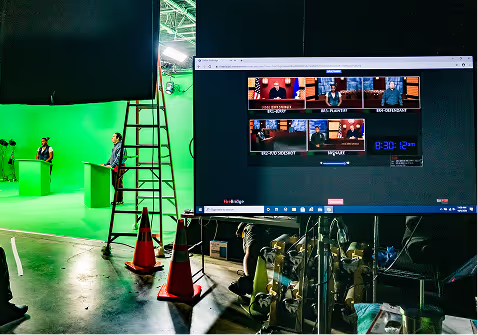
The creative must suit the placement. Premium streaming video may need a different opening or call to action from social content. Team Unity Media’s TV commercial production service covers development, production, post-production, and delivery.
5. Launch, Measure, and Adjust
Set the dates, locations, audience rules, budget, and frequency cap. Confirm what the platform will report and how conversions will be attributed.
Document the baseline before launch so later changes can be judged against the same audience, budget, geography, creative, and attribution rules.
Common campaign measures include:
- Impressions and unique reach
- Frequency by household or device
- Video completion rate
- Website visits or searches after exposure
- Conversions linked through an approved attribution method
- Return on ad spend when revenue data is available
The Roku campaign guide covers reach, conversion, and other outcomes. Reporting varies by publisher and buying route. A video distribution partner can coordinate placement across several outlets.
Why Brands Are Moving to Streaming TV Advertising

Streaming TV advertising is growing in popularity because it drives more results than regular TV.
1. Better Targeting
Ads in streaming services let brands target the people most likely to want their products, rather than everyone. Streaming TV advertising company employs cutting-edge data to match ads with the right viewers.
This targeted action increases the odds of engagement and conversion on your site.
2. Less Ad Waste
With TV, ads are presented to everyone: those who don't care and those who want no ads at all. Streaming TV reduces ad waste because brands pay only for audiences who are expected to respond.
Thus, marketing budgets are both more effective and more efficient.
3. Measurable Results
Unlike traditional TV ads, streaming ads offer clean, actionable data. Brands can see how many people watched an ad in its entirety, which parts were skipped, and how many people took some kind of action after watching.
This kind of transparency makes it much easier to justify marketing spend.
4. Growing Audience
The number of streaming viewers is growing explosively as cable TV declines. This trajectory is a vivid illustration of how streaming has transformed the TV business.
More people are watching smart TVs, tablets, and mobile devices now than ever before. Hence, streaming advertising is vital for reaching audiences today.
5. Strong Brand Impact
The ads that stream on the big screen, like traditional TV, have a powerful visual and emotional punch. Such ads have a greater impact than mobile ads, helping establish brand recognition and loyalty.
Types of Streaming TV Advertising
There are various ad formats in streaming TV Advertising, and a good streaming TV advertising company knows which one is right for your brand.
1. Pre-Roll Ads
These are the ads that run before the content begins. They work because viewers are in the mood to watch the show: meaning they are less likely to hit skip.
2. Mid-Roll Ads
These are displayed throughout the show, much like regular TV commercials. They get viewers at their most engaged with the material.
3. Post-Roll Ads
These commercials run after the content concludes. They can be an effective means of strengthening a message or encouraging action.
4. Interactive Ads
Viewers of some streaming ads can click, scan a QR code, or take an action immediately. This added interaction helps increase engagement and conversions (sales or sign-ups). Amazon Ads documents these options across Prime Video and Fire TV inventory.
5. Pause and home-screen ads
Some services show static or video placements when content is paused or while viewers browse.
Match the format to the viewing moment. A mid-roll commercial can carry a fuller story, while a pause placement needs one clear visual and very little copy. Confirm duration, aspect ratio, audio, file size, and call-to-action rules before production begins for each platform used. Some services use non-skippable video ads. Netflix states that viewers on its ad-supported experience cannot skip or fast-forward ads. This rule does not apply to every service or placement.
Every ad format enables brands to reach their viewers in a meaningful way. But choosing the perfect match is crucial for marketing efforts to make maximum impact.
Common Myths About Streaming TV Advertising
Myth #1: Only Big Brands Can Benefit
Fact: Even small- and medium-sized businesses can take advantage of streaming TV advertising.
Myth 2: It's Too Expensive
Fact: A good streaming TV advertising company can run on budget campaigns.
Myth 3: People Skip All Ads
Fact: Most (if not all) streaming services include non-skippable ads.
How to Choose the Right Streaming TV Advertising Company
The partner should connect strategy, creative, placement, and measurement. Look past publisher logos and ask how the campaign will be managed.
Confirm platform access: Ask which publishers and marketplaces are included and whether inventory is bought directly or through other advertising companies.
Review targeting rules: Ask what data is used, where it comes from, and how privacy requirements are handled.
Check creative capability: A polished ad needs a clear message, not just production value.
Demand useful reporting: Reports should cover reach, frequency, completion, spend, and agreed outcomes, with attribution limits stated clearly.
Ask about optimization: Establish how often the campaign is reviewed and what can change after launch.
For a deeper partner comparison, read Team Unity Media’s company guide. Brands focused on attributed outcomes can also review the difference between brand campaigns and performance TV.
Future of Streaming TV Advertising
The future of streaming TV Advertising seems promising and strong. More and more people are cutting conventional cable subscriptions and opting for smart TVs, streaming devices, and online platforms. The pivot we're in is part of that transition, and live streaming will soon become the primary way people watch television, becoming a critical channel for brands to connect with viewers.
Brands that adopt streaming ads now will have a huge leg up on other brands. With richer data, improved targeting, and creative storytelling, advertisers can create highly customized messages that resonate with viewers on the spot.
Streaming ads also enable real-time tracking and measurement, enhancing efficiency and reducing campaign costs. Besides, all new ad formats, interactive elements, etc., will keep evolving, providing brands with loads of opportunities to engage customers.
This growth demonstrates in no uncertain terms how streaming has transformed both TV and the ad business, offering marketers thrilling new ways to find viewers with smarter and more effective tactics.
Final Thoughts: Why Streaming TV Advertising Matters
Streaming TV advertising is not a nice-to-have; in-showings on streaming networks are essential. It's an imperative for brands that want to remain relevant in a digital-first society. It takes the scale of television and applies the precision of digital marketing.
A trusted streaming TV advertising company works to get brands in front of the right viewers, reduce ad spend waste, and deliver clear results. Questioning how to market on streaming television? It helps brands stay ahead of changing viewing habits.
The move points up, obviously enough, how streaming has changed TV and made advertising smarter and more effective.
Team Unity Media is helping brands rise with powerful, converting streaming TV advertising services. As a well-versed streaming TV advertising company, we aim to identify your audience, select the optimal streaming platforms, and deliver measurable outcomes. We know how to advertise on streaming TV.
By bringing creativity, data, and strategy together, Team Unity Media helps brands embrace how streaming has transformed TV, turning streaming ads into business growth.
Frequently Asked Questions
1. What is the difference between OTT and CTV advertising?
OTT refers to video delivered over the internet without a traditional cable or satellite provider. A connected television is the screen or device used to watch it. The first term describes delivery, while the second describes where the content is viewed.
2. Can streaming ads target specific cities or ZIP codes?
Many platforms support city, state, market area, or ZIP code targeting. Options depend on the publisher, data provider, audience size, and location. Confirm the geographic method before launch.
3. What can a streaming TV campaign measure?
Common metrics include impressions, reach, frequency, completion, website activity, and attributed conversions. Define the measurement method, attribution window, and data source before buying media.
4. Do streaming ads work for local businesses?
They can suit healthcare providers, dealerships, restaurants, education providers, and home services. Geographic targeting can limit exposure outside the service area. Results still depend on the offer, creative, budget, and audience size.
5. How much does a streaming TV campaign cost?
There is no standard price. Cost changes with platform, inventory, audience data, geography, season, buying method, and production. Request separate estimates for production, media, platform fees, and campaign management.
Related Posts


.png)
.png)